To create a realistic 3D design, the first step is to select a model and then add texture to it. After adding texture to the model, the model indicates whether the surface is soft or rough. Texturing all enhances the model’s details, adds depth and character to it. It also helps you see how the object reacts to the light and what reflection it creates on the surface. Light reflection makes the digital object look more realistic and appear more natural. Therefore, the following blog is going to explain how texturing brings 3D objects to life, creating better story lines.
Why Texturing is Essential for 3D Visualization?
In simple words, texturing is the process of making a 3D object appear more real. With the help of texturing, you can add the right color to a surface to make it look unique and show how it reacts to light. However, if texturing is not added to an object, it might appear flat, dull, and artificial.
Adding texture to an object shows how a material should actually look. For example, you can show details regarding scratches on a metal surface, pores on skin, or lines formed on the wood. Such small details show the object’s roughness, depth, shine, and mood. Due to this texturing, the scene starts to appear more real, and the audience can easily connect with the characters and understand the environment.
MAAC Serampore’s 3D animation course explains that fact that texturing is a very essential part of visual design. So, it is mandatory for the students to apply textures to an object with the help of software such as 3ds Max, Substance 3D Painter, and Maya.
Therefore, by learning texturing in detail, students get the opportunity to sharpen their skills and start working professionally on different live projects. Texturing helps them create real objects for scenes in games, films, or any other visual media.
Role of Maps, Materials & Surface
3D models generally appear real when you apply the right texture maps and materials. Materials generally work like a settings box, which helps in controlling the behavior of the surface, such as its roughness, colour, reflection, and transparency. These are the simple settings that command the software on how an object must react to the light and shadow, so that it appears real.
Next, texture maps are considered to be images placed on the materials, adding extra visual details without changing the shape of the model. For example, with the help of a normal map, even a flat surface can have a bumpy look or appear grooved. Next, roughness and metallic maps are required to make a surface shiny, just like the metal, or dull and soft. Therefore, using the combination of these maps, the artists can add more small details to make the object authentic and real.
The 3D animation course offered by MAAC Serampore consists of detailed lessons on texturing and steps for object look development. So, if you take admission in MAAC Serampore, you can receive practical experience because you can work with advanced software such as Autodesk Maya and Substance 3D Painter. Working with this software helps you learn how the entertainment industry works and make an object look realistic.
The Transformation of Flat Color to Something More Realistic
A 3D model generally shows the original shape and color of an object, which first appears on a screen. Even if it works fine, it might not appear very attractive to the audience. So, it were texturing is required to make it look real. In the texturing process, more layers of detail are added to turn a dull model to real object.
In texturing, the artist needs to change colors, add small marks, show shadow, reflection, and shine of the object. Such small details show how the surface reacts to the light, and eventually, the model starts to appear more real than artificial. Thus, allowing the audience to feel more connected to what they see on screen.
MAAC Serampore’s 3D animation course teaches the texturing process to the students in great detail. While working on several projects, the students can also work with advanced tools such as Substance 3D Painter and Maya. Working with these tools helps them learn how to make a scene appear real.
Conclusion
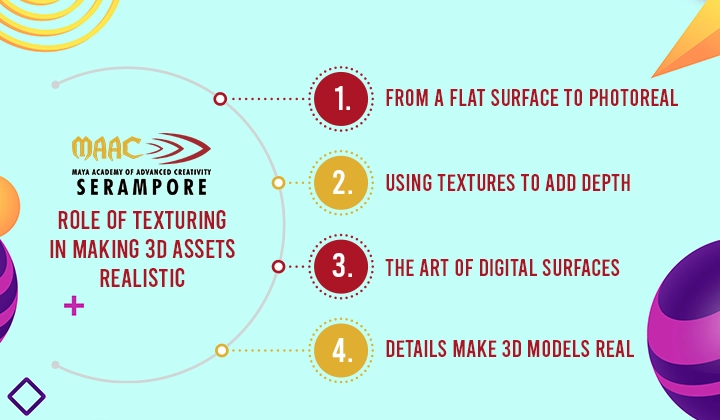
Texturing is an essential technique that turns 3D assets into something more realistic, detailed, and visually engaging. You can easily learn such techniques by joining the 3D animation course offered by MAAC Serampore.