

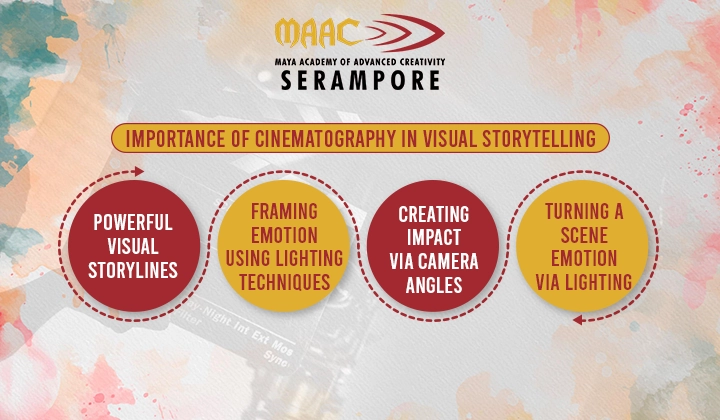
Visual storytelling is not just about dialogue; it relies heavily on great cinematography to allow viewers understand the mood, emotions, and meaning of a scene. The filmmakers can offer a creative film experience and shape their perception with the help of framing, lighting, colour, and movement of the characters and objects. They generally use strong cinematic techniques to turn a simple scene into powerful visuals, leaving a lasting impression on the audience. Therefore, the following blog is going to shed light on different cinematography techniques to turn a simple scene into an engaging storyline.
Role of Cinematography in Visual Stories
Cinematography is the core factor of filmmaking. It creates the backbone of the story, providing a backbone for how the viewers are going to see and feel every scene. MAAC Serampore teaches different kinds of techniques used in cinematography turn a storyline into compelling visuals through careful planning and execution. Let’s look into the role of cinematography:
- Creating Visual Language: Angles and frames play a very important role in how the viewers are going to interpret the characters, situations, and emotions. Strong visuals are something that the audience can anticipate a scene without the dialogue.
- Atmosphere & Mood: Colour tones and lighting styles describes a scene is emotional or not. It also shows whether the scene is joyful, suspenseful, calm, or dramatic.
- Attention & Focus: The story elements used in every scene are displayed with the help of proper camera placement, composition, and depth.
- Setting the Narrative: The filmmakers need to ensure that the visual style is consistent to run a smooth storyline, allowing a natural connection of the scenes with the thinking of the audience. This makes the scene more engaging.
Therefore, using proper cinematography techniques ensures that a story is not told to the audience, but they can feel every emotion. It then creates a base for impactful visual storytelling as well as professional experience in the digital filmmaking field.
How Do Camera Angles Shape Emotional Storylines?
Camera angles play a very important role in shaping both the emotions and perception of the viewers. MAAC Serampore teaches its students how a strategic camera angle can highlight the depth of the character, create tension, and influence the entire storyline.
The students are taught to use varied angles, such as low shots for empowerment and high shots to show vulnerabilities. Such angles alter the views of the audience dramatically while conveying the movement of the characters. The exclusive curriculum of MAAC Serampore includes visual language, allowing the students to learn about how to control mood, perspective, and engagement with the help of composition.
Furthermore, the techniques used by the filmmakers are to highlight different emotional responses, turning the scene more impactful and immersive. If you are willing to learn about different camera angles, MAAC Serampore offers hands-on experiences by using real projects and equipment. Working on live projects allows you to understand the fundamentals of visual storytelling and create a strong foundation in the digital filmmaking field.
Turning Ordinary Scenes Using Lighting Techniques
Lighting techniques are the core parts because it shapes a scene, as taught by MAAC Serampore. Lighting techniques have the power to turn an ordinary scene into a most majestic or emotional one. They offer practical classes where students can learn how lighting adds depth, sets the mood, and creates focus in every frame.
By receiving hands-on training, the students learn that different lighting setups influence the texture, atmosphere, and contrast. So, the budding creators gather these skills to turn ordinary visuals into the most engaging visuals, highlighting the storylines.
Conclusion
Cinematography is the essential part of visual storytelling because it can turn an ordinary scene into the most emotionally rich visuals, and the students can build a strong career in digital filmmaking.